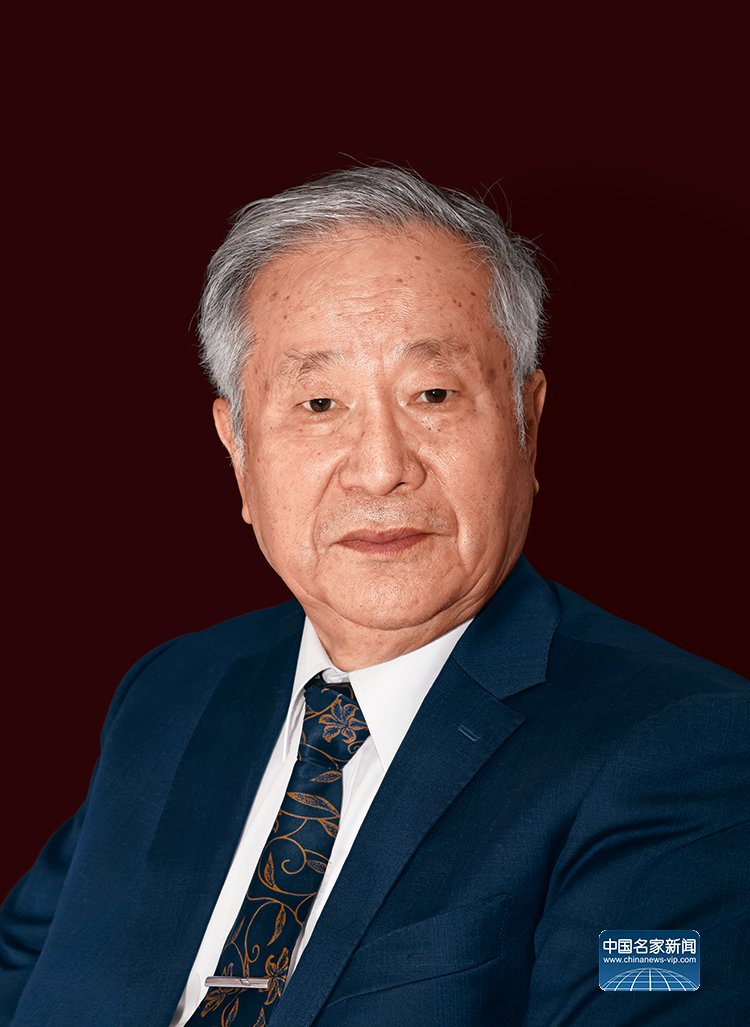
Li Geng
President of Li Keran Painting Academy and President of Heshan Painting Association of China Artists Association
Wang Baosheng, Editor-in-Chief of Chinese Cultural Figures/Photo Report
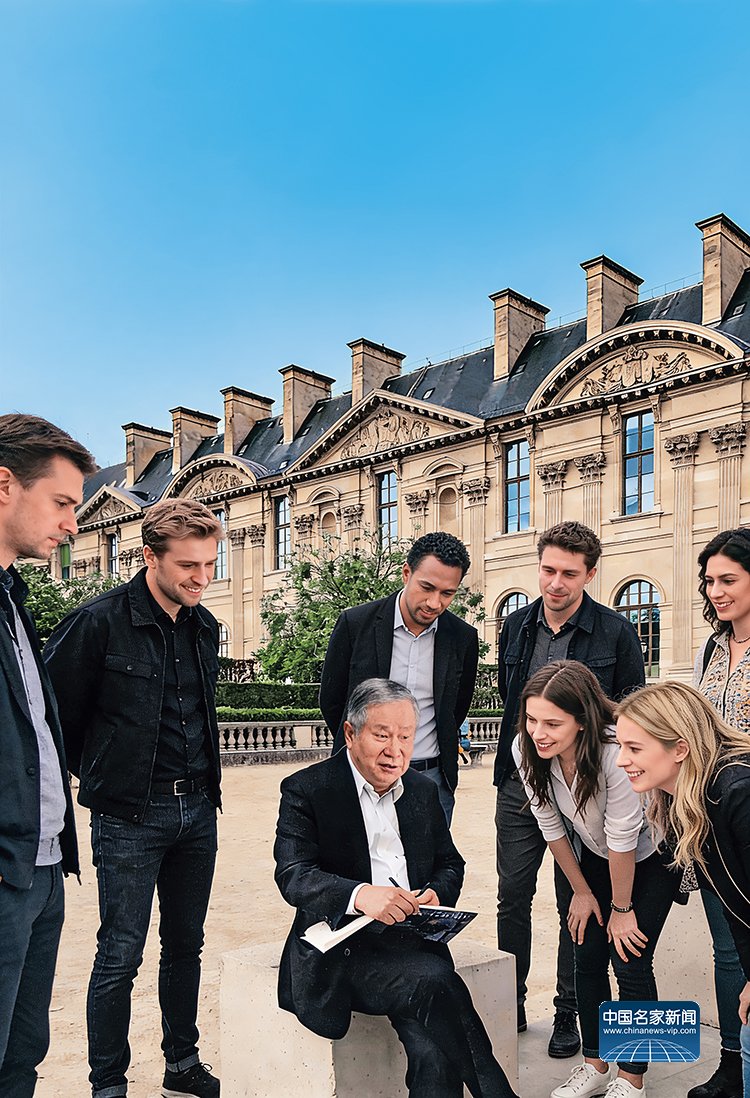 Li Geng's Sketching on the Street in Europe
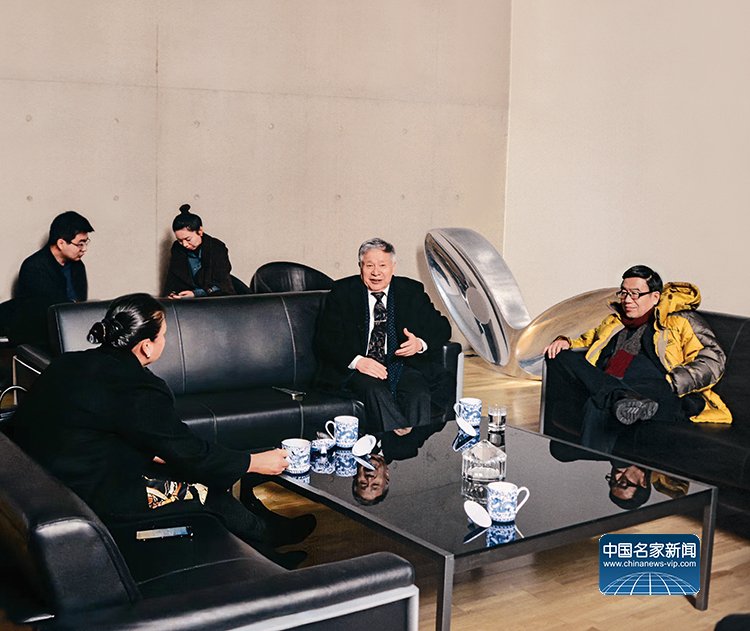 Li Geng Discussing and Exchanging Ideas with Artists
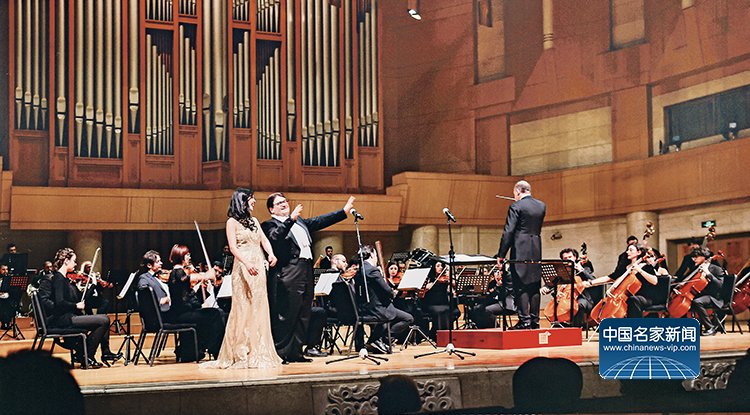 On January 7, 2020, the 2020 Spring Festival Concert of Li Keran Art Academy was held in Zhongshan Park Concert Hall in Beijing.
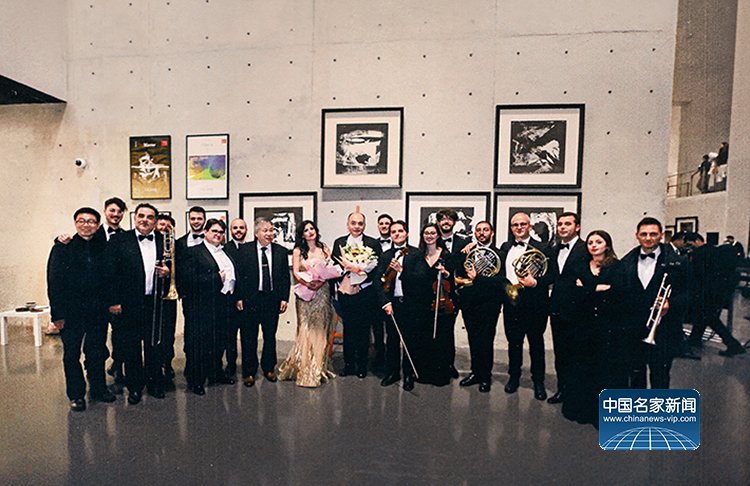 In December 2019, the exhibition “Beyond the Ordinary: Li Geng's Works from the Li Keran Painting Academy Collection” was held at the Long Museum (West Bund) in Shanghai, where Li Geng interacted with musicians from the Sicilian Philharmonic Orchestra on site.
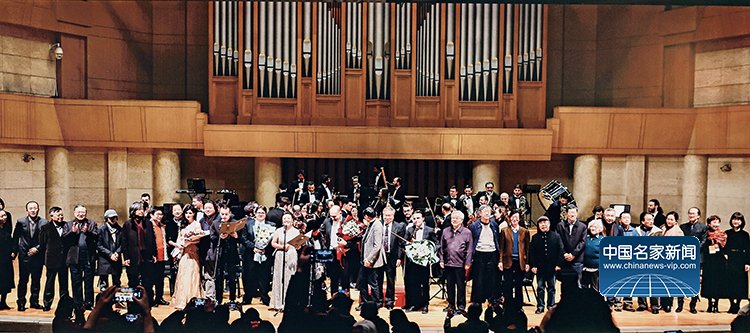 Li Keran Art Academy invited the Italian Sicilian Philharmonic Orchestra to present a splendid artistic feast at the 2020 Spring Festival Concert.
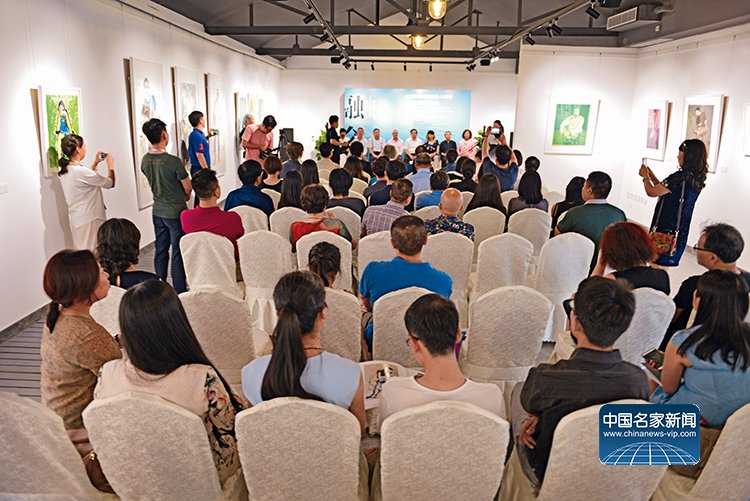 On July 9, 2017, Integration: Chinese-German Artists Group Exhibition Celebrating the 45th Anniversary of China-Germany Diplomatic Relations (Beijing Leg) opened in Beijing.
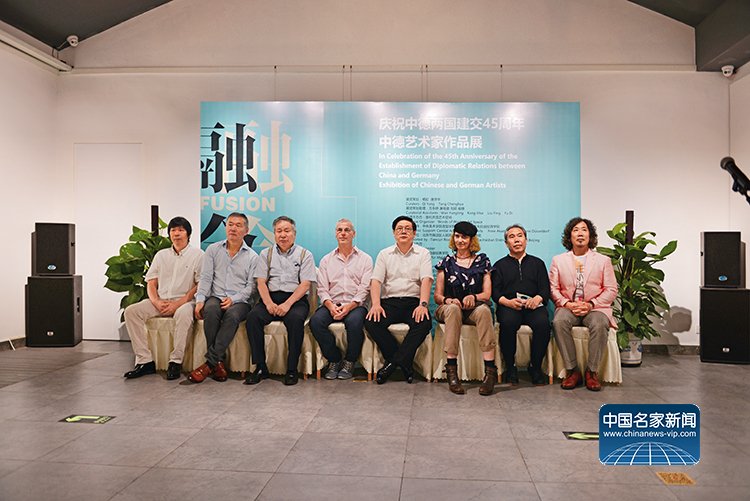 Li Geng poses for a group photo with Chinese and German artists and guests at the opening ceremony of Integration: Chinese-German Artists Group Exhibition Celebrating the 45th Anniversary of China-Germany Diplomatic Relations (Beijing Leg).
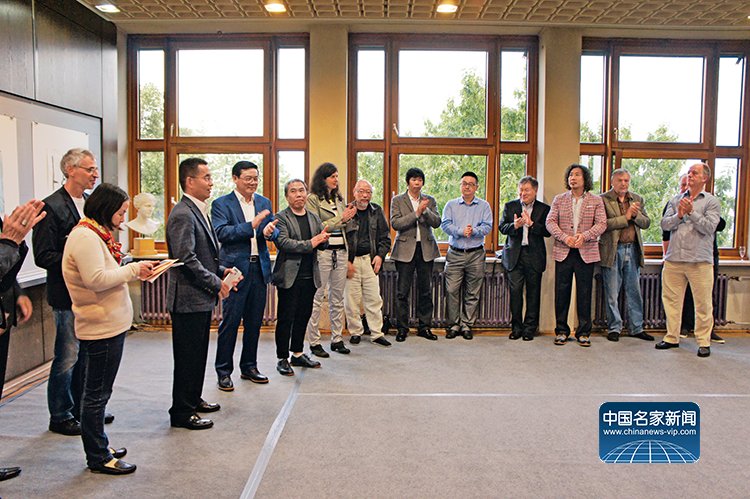 On August 10, 2017, Integration: Chinese-German Artists Group Exhibition Celebrating the 45th Anniversary of China-Germany Diplomatic Relations (Germany Leg) opened in Düsseldorf, Germany.
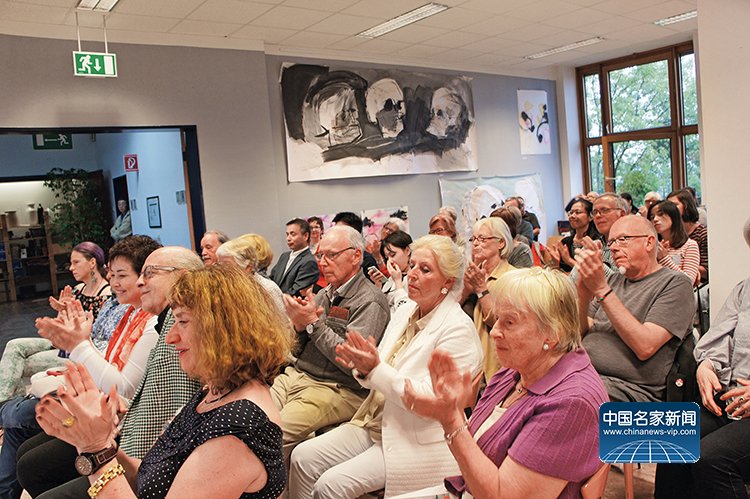 Scene from the opening ceremony of Integration: Chinese-German Artists Group Exhibition Celebrating the 45th Anniversary of China-Germany Diplomatic Relations (Germany Leg).
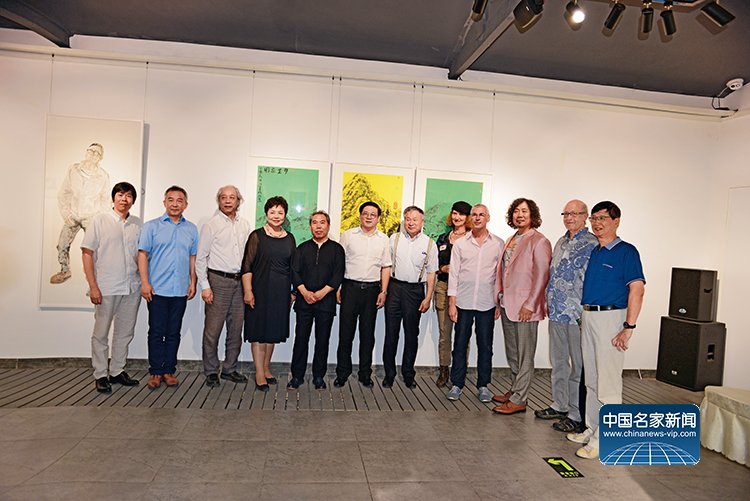 Guests at the opening ceremony of Integration: Chinese-German Artists Group Exhibition Celebrating the 45th Anniversary of China-Germany Diplomatic Relations (Beijing Leg) take a group photo at the exhibition.
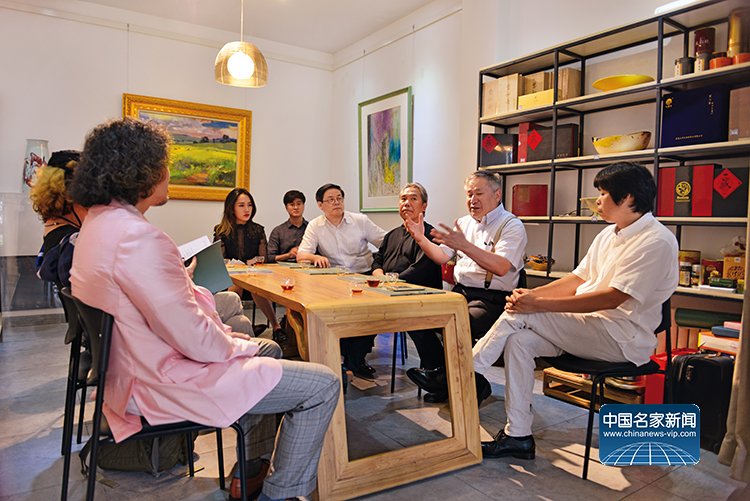 Li Geng discusses and exchanges ideas with Chinese and German artists at Integration: Chinese-German Artists Group Exhibition Celebrating the 45th Anniversary of China-Germany Diplomatic Relations (Beijing Leg).
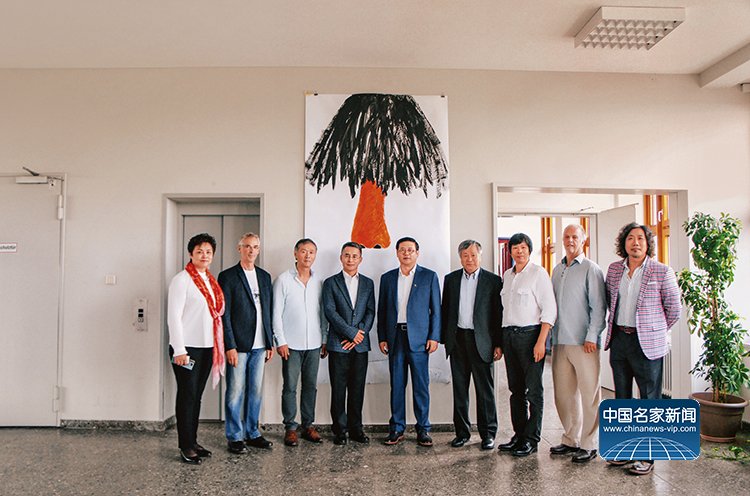 Li Geng poses for a group photo with Chinese and German artists and guests at the opening ceremony of Integration: Chinese-German Artists Group Exhibition Celebrating the 45th Anniversary of China-Germany Diplomatic Relations (Germany Leg).
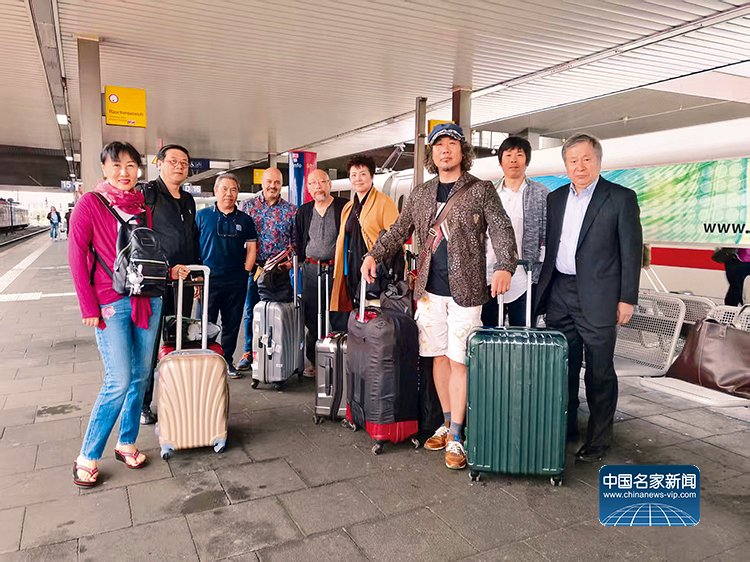 Li Geng and other Chinese artists at Integration: Chinese-German Artists Group Exhibition Celebrating the 45th Anniversary of China-Germany Diplomatic Relations (Germany Leg) in Germany.
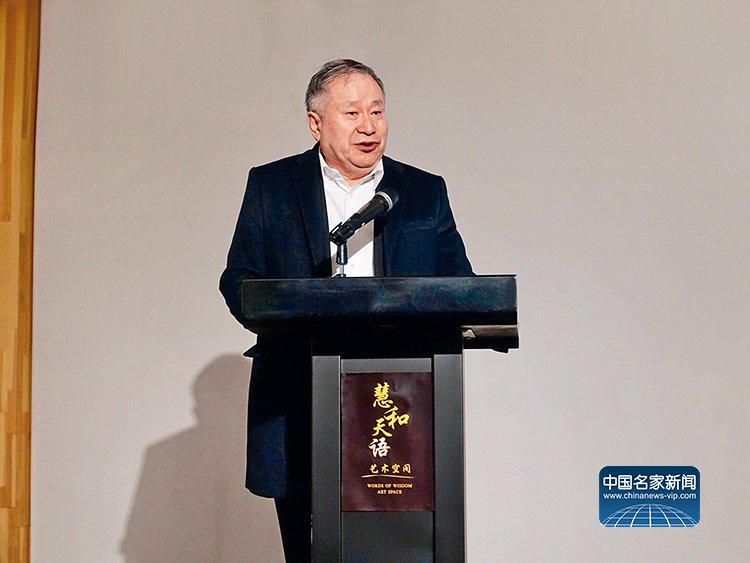 On March 18,2018, Li Geng attended the opening ceremony of the exhibition "Heartfelt Expressions in Red Ink and Spring Mountains: A Three-Artist Exhibition by Xu Li, Li Geng and Tang Chenghua" in Beijing and delivered a speech.
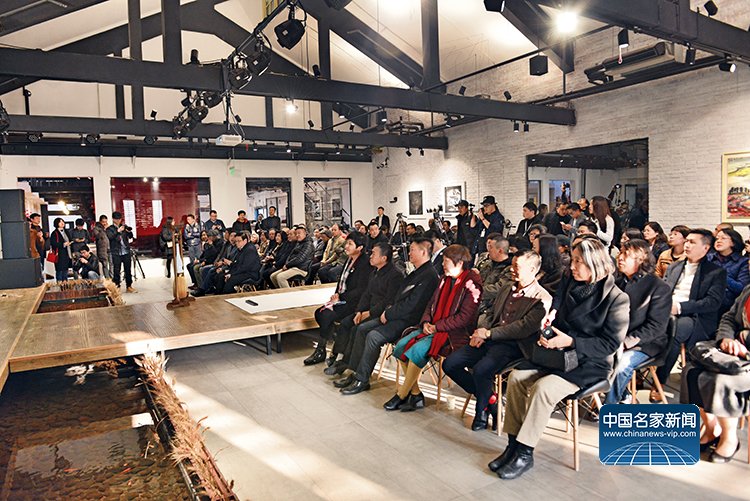 The Opening Ceremony of the Exhibition of "Heartfelt Expressions in Red Ink and Spring Mountains: A Three-Artist Exhibition by Xu Li, Li Geng and Tang Chenghua"
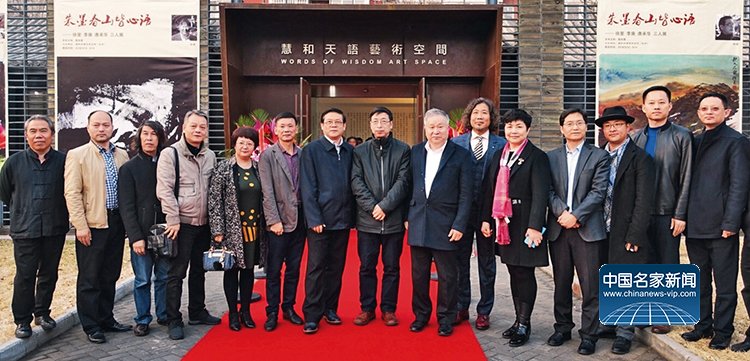 Group photo of artists and guests attending the opening ceremony of "Heartfelt Expressions in Red Ink and Spring Mountains: A Three-Artist Exhibition by Xu Li, Li Geng and Tang Chenghua"
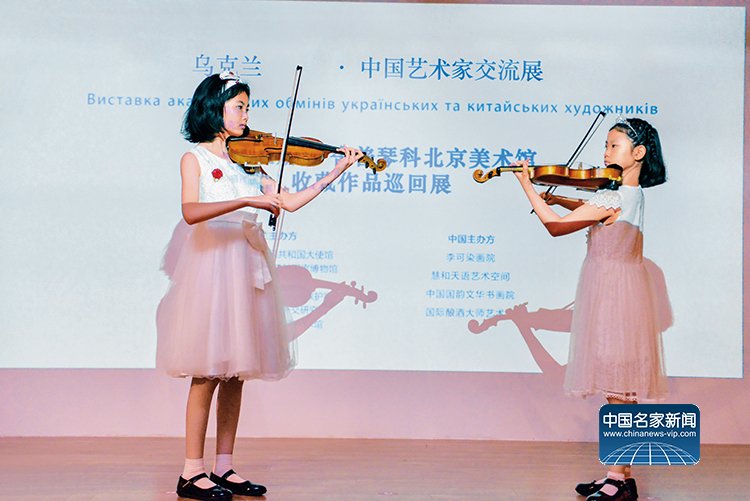 On July 29,2018, the opening ceremony of "Ukraine China Artist Exchange Exhibition and Taras Shevchenko's Collection Works Touring Exhibition at Beijing Art Museum" was held in Beijing.
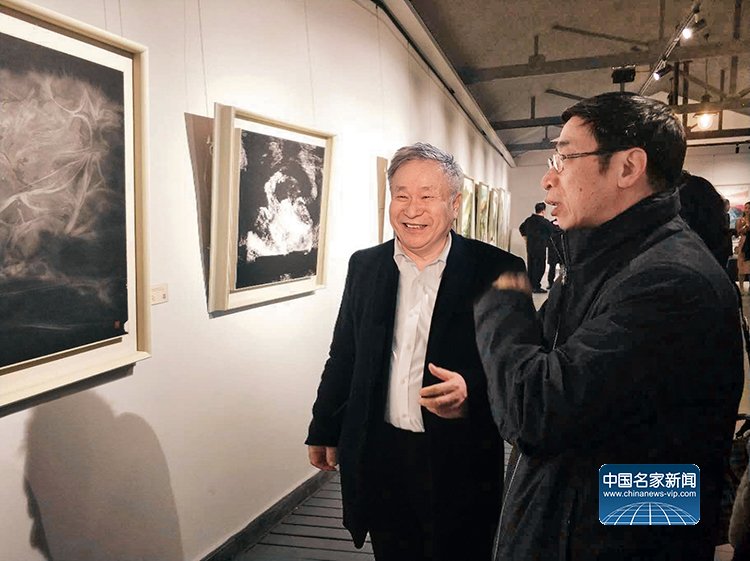 Mr. Li Geng and Mr. Yin Shuangxi, a critic, communicate in front of the exhibition works.
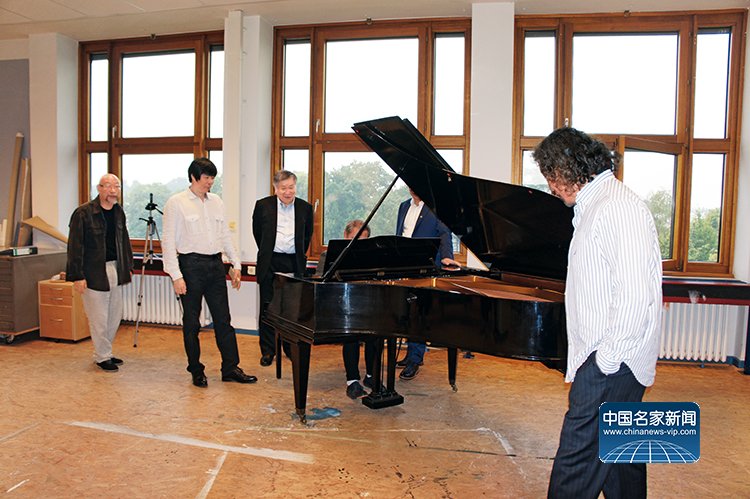 Mr. Li Geng's communication with German artists during the exhibition in Germany.
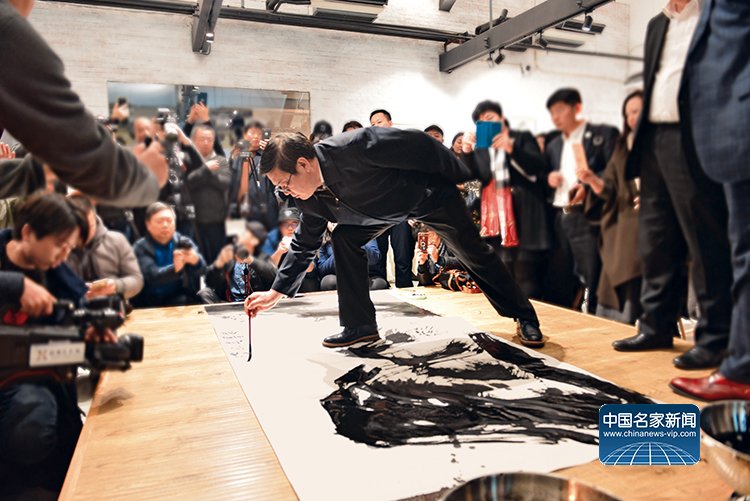
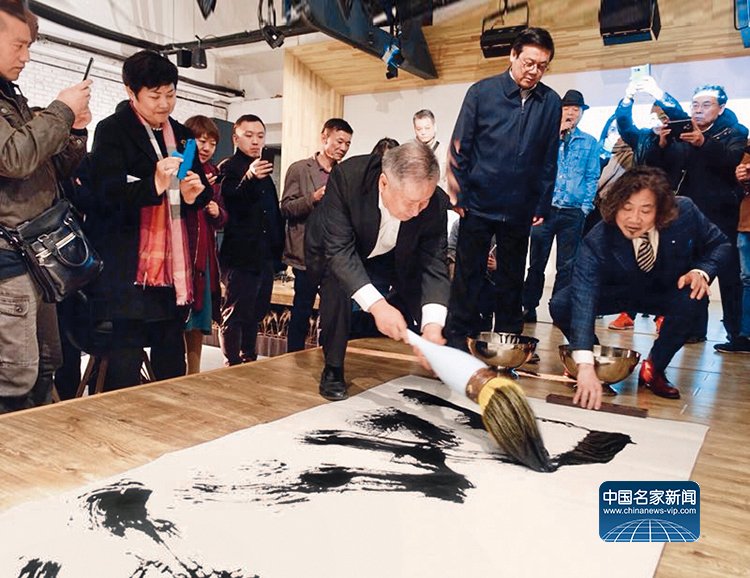 Li Geng wrote with his brush at the opening ceremony, expressing the landscape in his heart with the unique charm of the Eastern ink art.
 Xu Li, Li Geng and Tang Chenghua collaborated on an improvisational work at the exhibition.
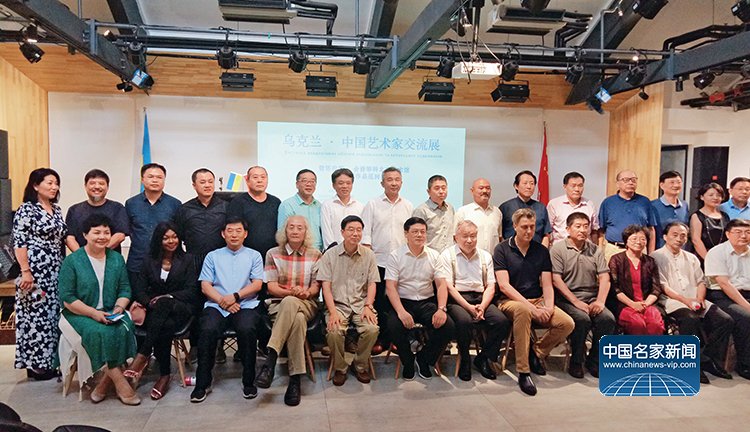 Li Geng took a group photo with the artist guests attending the opening ceremony of the "Ukraine China Artist Exchange Exhibition and Taras Shevchenko's Collection Works Touring Exhibition at Beijing Art Museum".
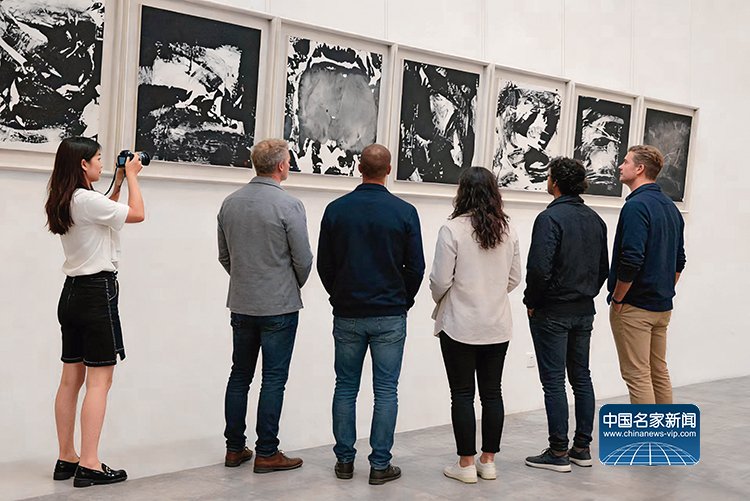 The audience admires the ink series works created by Li Geng at the exhibition site
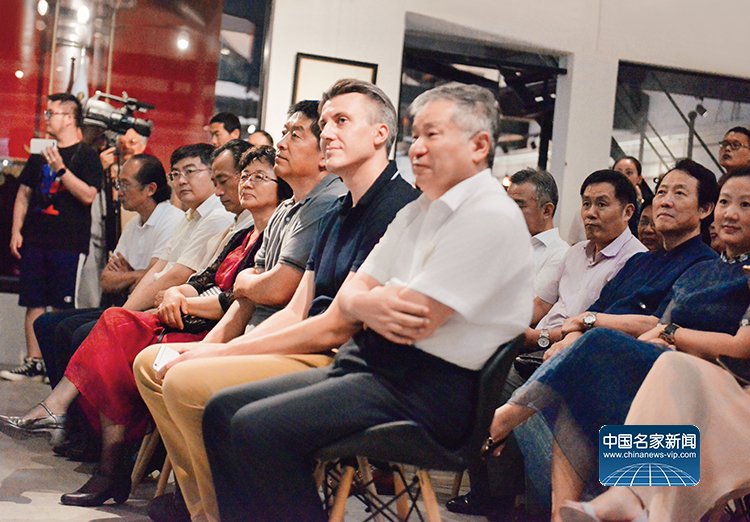 The Opening Ceremony of the Exhibition
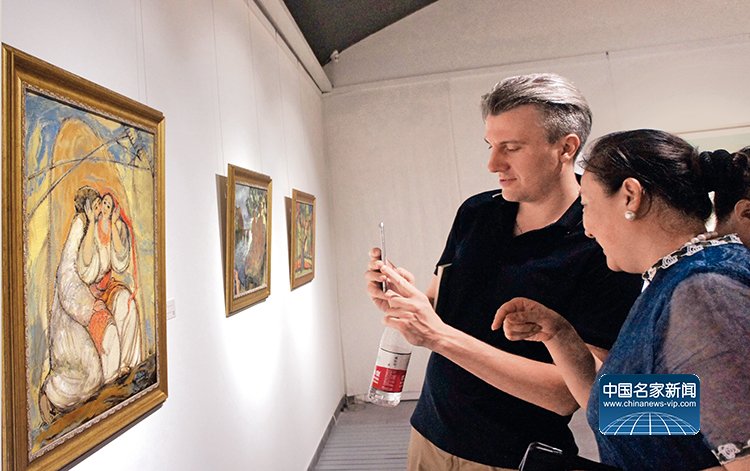 Exhibition Venue
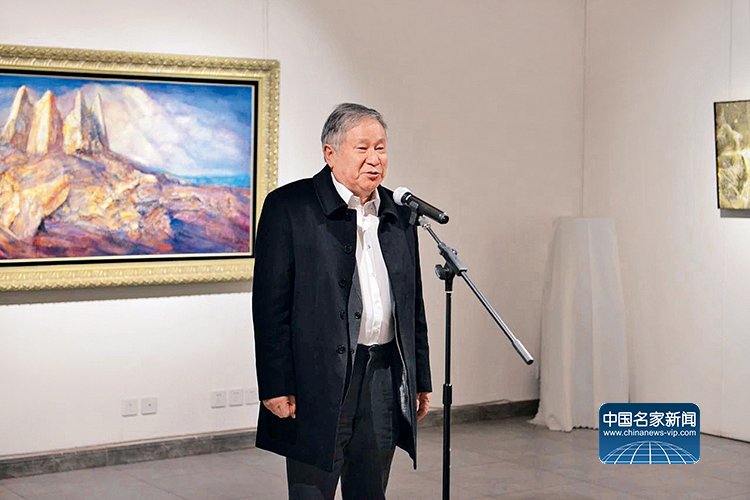 On November 18,2018, Li Geng attended the opening ceremony of "New Ideas, New Journey: Huihe Tianyu · Invitational Exhibition of Chinese Famous Artists' Paintings" and delivered a speech.
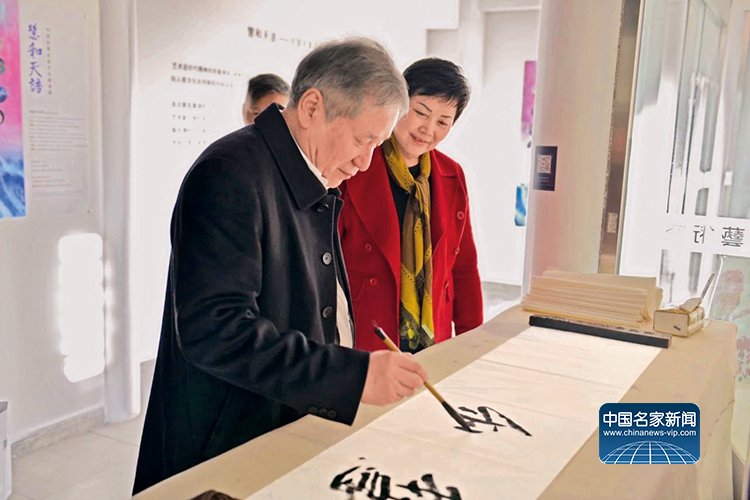 Li Geng's Impromptu Composition at the Opening Ceremony
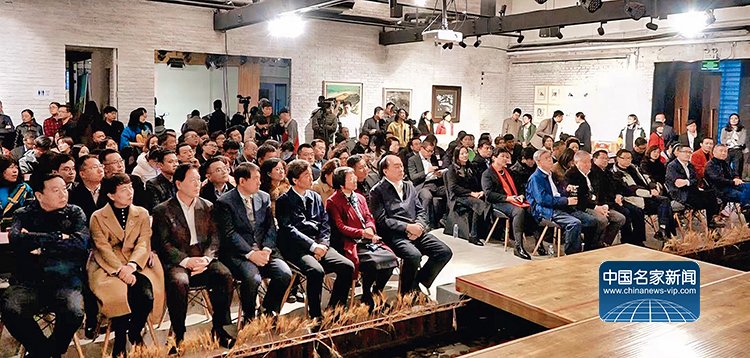 On November 11,2019, the art exhibition "Grand Beauty—China Ink Painting and Mahler Symphony" was grandly opened in Beijing.
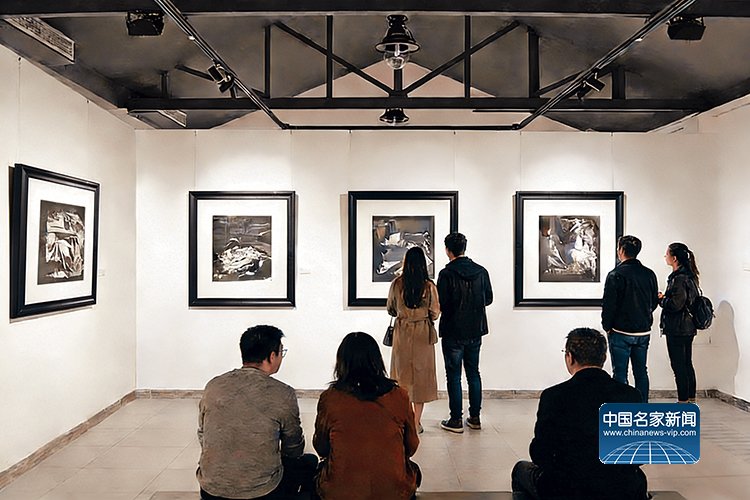 "New Ideas, New Journey—Huihe Tianyu · Invitational Exhibition of Distinguished Chinese Painters" on-site
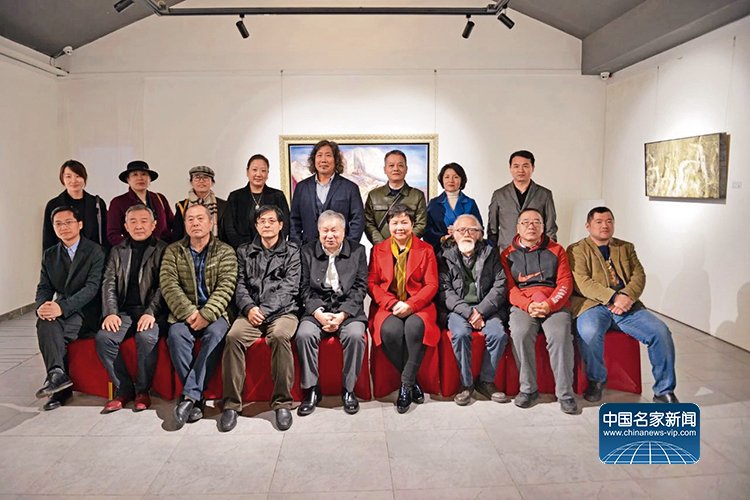 Li Geng and other artists attended the opening ceremony of "New Ideas, New Journey—Huihe Tianyu · Invitational Exhibition of Distinguished Chinese Painters" and took a group photo as a memento.
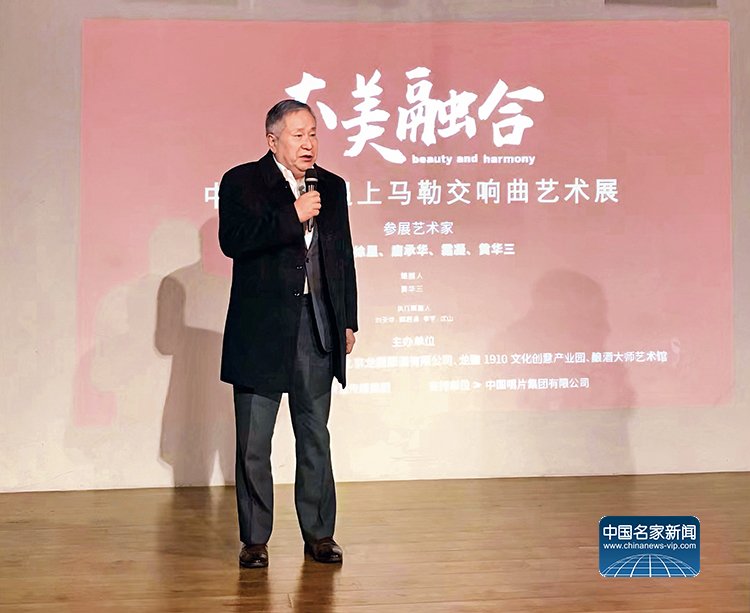 Li Geng attended the opening ceremony of the art exhibition "Grand Beauty—China Ink Painting and Mahler Symphony" and delivered a speech.
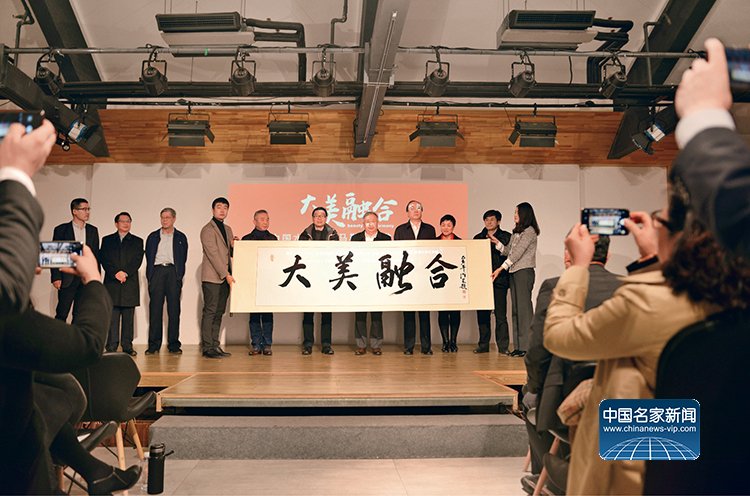 Li Geng took a group photo with the artist guests attending the opening ceremony of the art exhibition "Grand Beauty—China Ink Painting and Mahler Symphony"
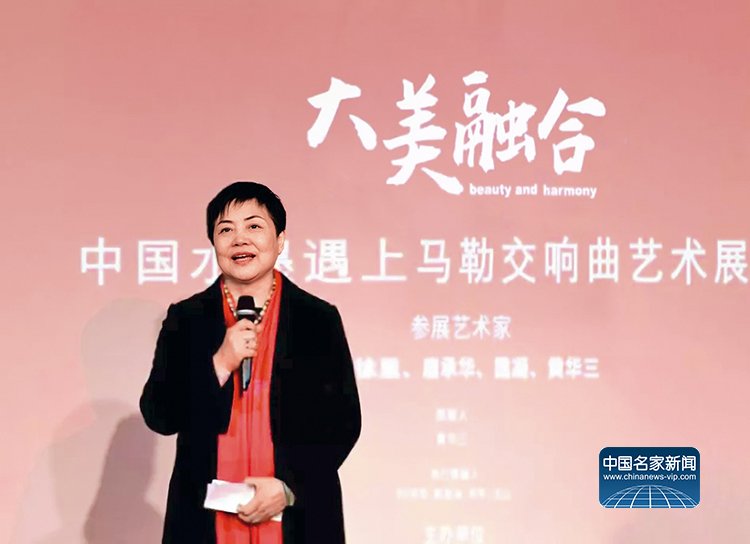 Guo Cuiping, curator of Huihe Tianyu Art Space, attended the opening ceremony of the art exhibition "Grand Beauty—China Ink Painting and Mahler Symphony" and delivered a speech.
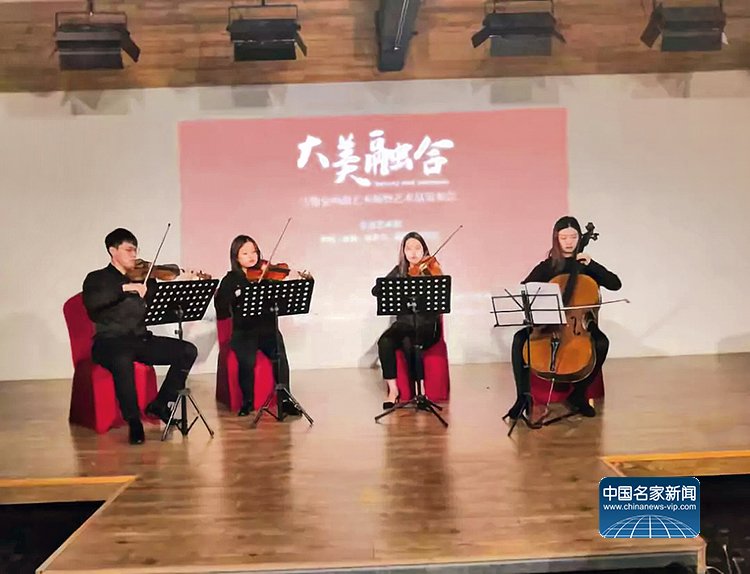 The opening ceremony of the art exhibition "Grand Beauty —China Ink Painting and Mahler Symphony"
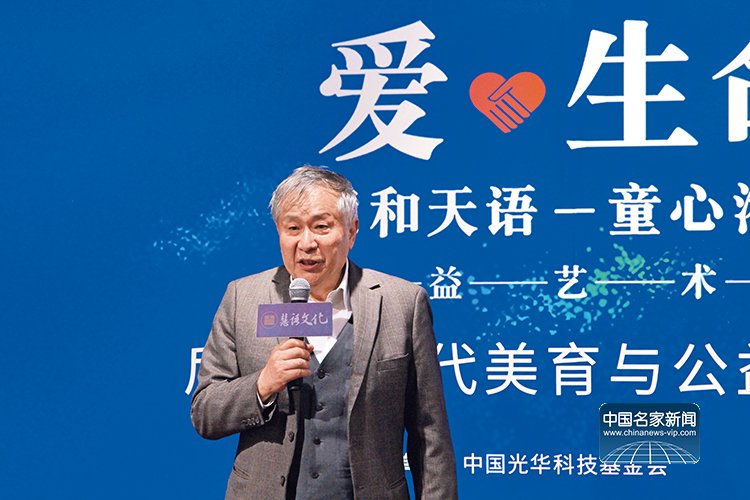 Li Geng, President of Li Keran Painting Academy, attended the opening ceremony and delivered a speech.
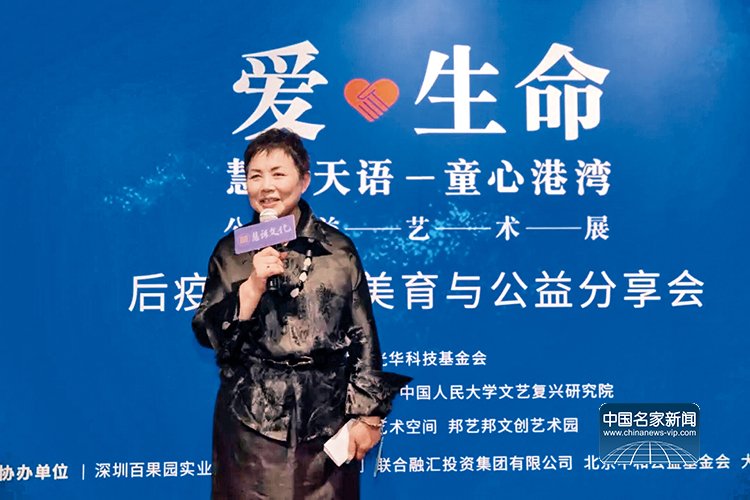 Guo Cuiping, Director of Huihe Tianyu Art Space, attended the opening ceremony and delivered a speech.
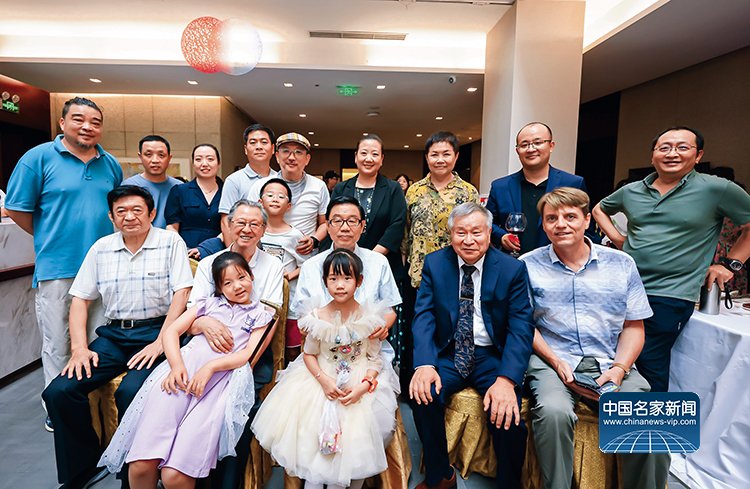 On July 26,2024, the exhibition "Cultural Bridge: Artistic Journey of the 60th Anniversary of China-France Diplomatic Relations" was inaugurated in Beijing.
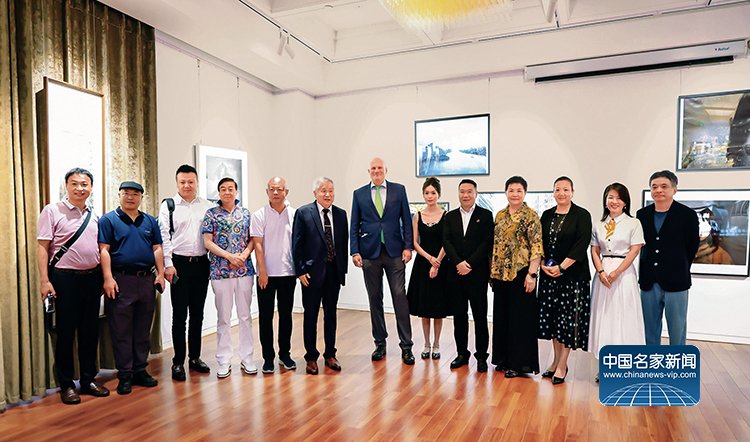 Li Geng, President of Li Keran Painting Academy, attended the opening ceremony and took a group photo with ambassadors of Switzerland, UAE and other countries and artists.
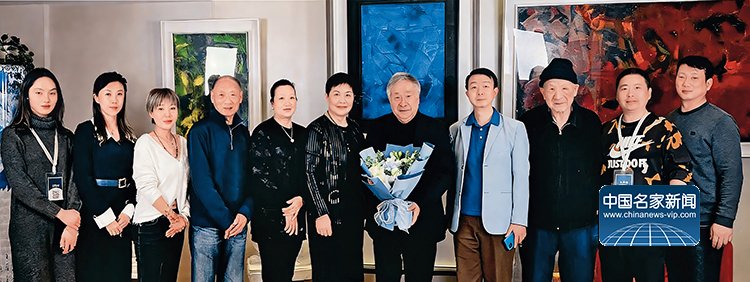 Li Geng and the artists who attended the exhibition and salon of "Folding Time".
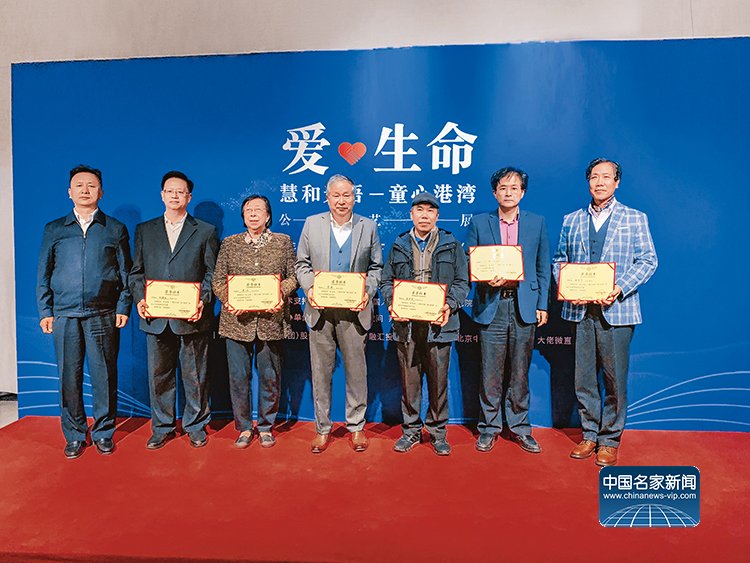 On October 20,2020, the "Love · Life—Huihe Tianyu (Childhood Harbor) Public Welfare Art Exhibition" was inaugurated in Beijing.
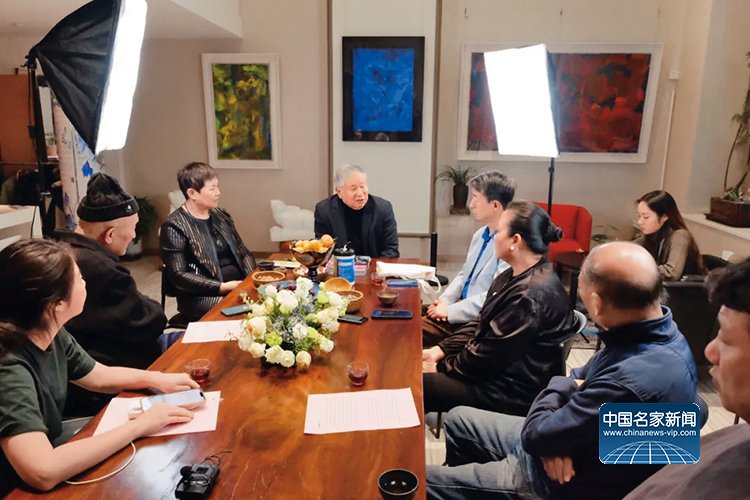 On December 6, 2023, Li Geng's "Folding Time" Art Exhibition and Salon Event was held in Beijing.
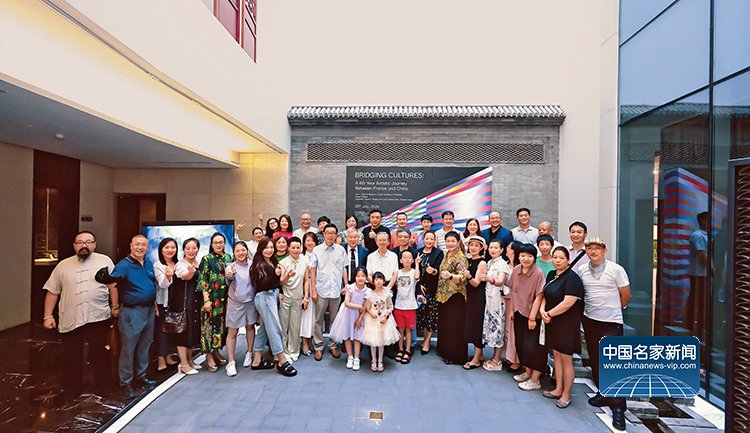 A Group Photo at the Opening Ceremony of the Exhibition of Works of "Cultural Bridge: Artistic Journey of the 60th Anniversary of China-France Diplomatic Relations"
(Wang Baosheng, Editor-in-Chief of Chinese Cultural Figures) Civilizations thrive through exchange and enrich one another through mutual learning. Such interaction is a vital driving force for the progress of human civilization. To promote Chinese culture globally and advance exchanges and mutual learning between different civilizations is an important mission of cultural workers in the new era. Li Geng, a master of ink art with profound traditional roots and a global vision, has built bridges through his artistry. From his 30s when he studied in Japan to hosting lectures on Eastern art in Germany, from receiving Japan’s highest cultural honor to touring over 40 cities worldwide, Li has spent half his life bridging Chinese and international cultures. His work has brought Chinese ink art to global prominence, embodying the spirit of “being open and inclusive, drawing on foreign achievements, and facing the future”, while contributing artistic power to the Global Civilization Initiative.
Overseas Academic Pursuits: Integrating Chinese and Western Vision and Forging a Solid Foundation for Mutual Learning
The foundation of civilizational exchange and mutual learning lies in profound understanding of diverse cultures. At the age of 30, Li Geng, already a rising star in China’s art scene, made the bold decision to leave his established career and pursue studies at Kyoto University’s Graduate School of Arts in Japan. This choice stemmed from his artistic aspiration to “embrace the world’s myriad phenomena and seek a broader cultural context”, which later became the cornerstone for his efforts to promote cultural exchanges between China and the world.
During his postgraduate studies at Kyoto City University of the Arts in Japan, Li Geng systematically studied the creative techniques and artistic concepts of Japanese painting, and gained an in-depth understanding of the inheritance and innovative practices of traditional Eastern art in the Japanese art world. Japanese painting, based on the essence of Chinese ink art, has developed a unique artistic style. This model of inheriting and innovating tradition deeply inspired Li Geng. At the same time, he extensively explored Western modern art theories, delving into the creative concepts of Western art masters such as Cezanne, seeking points of convergence in the dialogue between Eastern and Western art.
During his study abroad, Li Geng always embraced the artistic nourishment of different cultures with an open mind, yet never lost himself. He steadfastly adhered to the standpoint of traditional Chinese culture, taking Chinese ink art as the core, and continuously reflected on the differences and commonalities between Chinese and Western art in his studies. He discovered that whether it is the “beauty of artistic conception” in Chinese ink art or the “beauty of form” in Western modern art, both embody humanity’s shared pursuit of beauty. This commonality is precisely the foundation for the exchange and mutual learning between civilizations. Years of overseas study have endowed Li Geng with a profound traditional foundation and a broad international perspective, and also made him deeply realize that promoting Chinese culture to the world is not simply about cultural export, but about achieving mutual learning and exchange among different civilizations through equal dialogue.
Teaching and Inheriting Art: Sowing the Oriental Aesthetics and Building a Bridge of Communication
If overseas study was Li Geng’s learning and absorption of world cultures, then overseas teaching was his important practice of spreading Eastern aesthetics to the world and promoting cultural exchanges. In 1986, Li Geng was invited to preside over a lecture on Eastern art at the University of Munster’s School of Arts in Germany, making him one of the pioneers who systematically introduced Chinese ink art to Western audiences. During the lecture, he not only elaborated on the development of Chinese ink art and brush techniques, but also demonstrated the unique charm of ink art, such as “the interplay of void and substance” and “vitality of spirit”, through live painting
demonstrations.
Western audiences are filled with curiosity about Eastern ink art, and his lectures were always packed. Li Geng, using accessible language, eloquently explained the philosophical concept of “harmony between heaven and humanity” and the cultural connotation of “the same origin of poetry and painting” behind China’s ink art. This allowed Western audiences to appreciate the beauty of brushwork while gaining a deeper understanding of the spiritual core of China’s excellent traditional culture. A German scholar remarked after the lecture: “Mr. Li Geng’s lecture revealed a completely new form of art. This art not only emphasizes visual beauty but also contains profound philosophical reflections, offering us a fresh perspective on Eastern culture.”
After that, Li Geng taught for a long time at renowned institutions such as Kyoto University of the Arts in Japan, becoming the university’s first foreign professor. During his teaching in Japan, the biggest challenge he faced was how to make Japanese students understand and accept the spiritual connotation of Chinese ink art. To this end, he innovated his teaching methods by combining the creative practice of “Li School Landscape” with the teaching of Japanese painting, using comparative analysis to help students appreciate the unique charm of Chinese ink art through differences. At the same time, he actively promoted exchanges and cooperation between Chinese and Japanese art schools, organizing students to participate in cross-border art field trips, joint creative activities. In this way, students from both countries enhanced mutual understanding and deepened friendship through hands-on practice.
More remarkably, during his teaching in Japan, Li Geng revived the university ink painting course that had been abolished due to the influence of the Meiji Restoration’s “de-Asianization and Eurocentrization” theory, formally incorporating traditional Chinese ink art into Japan’s art education system. This initiative not only facilitated the broader dissemination of China’s ink art in Japan but also established a long-term and stable platform for cultural exchange between China and Japan. Through years of overseas teaching practice, Li Geng has cultivated a large number of foreign students who loved China’s ink art. These students have become an important force in promoting cultural exchanges between China and foreign countries, allowing the seeds of Eastern aesthetics to take root and sprout around the world.
Honor and Contribution: Culture Contribution and Exemplary Communication
In 1993, Li Geng was awarded the Ganshou Medal by Japanese Prime Minister Miyazawa for his “contributions to cultural endeavors” and honored with the title of Cultural Meritorious Person of Kakogawa City. The Ganshou Medal is a prestigious honor bestowed by the Japanese government to individuals who have made outstanding contributions in academia, arts, and culture. Li Geng’s receipt of this distinction fully demonstrates that his achievements in promoting Sino-Japanese cultural exchanges and disseminating China’s excellent traditional culture have gained high recognition from both the Japanese government and society at large.
Behind this honor lies Li Geng’s years of relentless efforts and selfless dedication. During his time in Japan, he not only spread China’s ink art through teaching but also actively organized and planned cultural exchange activities between China and Japan. He held dozens of solo and joint exhibitions in Japan, allowing the Japanese public to appreciate the charm of China’s ink art up close. Additionally, he compiled multiple ink art textbooks, systematically introducing the techniques and theories of China’s ink art, providing crucial materials for its dissemination in Japan.
After receiving the honor, Li Geng became even more determined to promote cultural exchanges between China and Japan. He stated, “This honor is not mine alone, but belongs to all those who have contributed to Sino-Japanese cultural exchanges. It is both an encouragement and a responsibility for me. I will continue to work towards fostering cultural exchanges between the two countries, enabling the people of both nations to deepen understanding and strengthen friendship through art.” Indeed, Li Geng has kept his promise with concrete actions. For years, he has been actively involved in Sino-Japanese cultural exchanges, organizing a rich variety of cultural events, and has become a role model in this field.
Li Geng’s cultural contributions have not only been recognized by the Japanese government but also widely praised by the international art community. International art critics regard his artistic practice as “a successful model for the exchange and mutual learning among different civilizations. Through his brushwork, he has broken down cultural barriers, allowing China’s excellent traditional culture to demonstrate its strong vitality on the world stage.”
Global Art Exhibition: Sharing Chinese Stories, Advancing Dialogues among Civilizations
Art exhibitions serve as an important vehicle for promoting cultural exchange and a significant way to tell China’s story well. Over the years, Li Geng has consistently regarded hosting international exhibitions as a key approach to fostering cultural exchanges between China and the world. He has organized touring exhibitions in more than 40 cities globally, showcasing the splendor of Chinese ink art to the world. Among these, the “Endless Rivers and Mountains-Professor Li Geng’s China-Europe Touring Art Exhibition” held in 2016 stands as a classic event that promoted cultural exchanges between China and Europe.
The touring exhibition was held successively in Beijing, Slovakia, Hungary, Ukraine, and other countries and regions. Under the theme of “Endless Rivers and Mountains”, the exhibition showcased dozens of ink works created by Li Geng in recent years. These works include both realistic pieces depicting the magnificent landscapes of China and abstract works incorporating Western modern art concepts, fully demonstrating the diversity and innovation of China’s ink art. During the preparation stage, Li Geng carefully selected the works, striving to ensure that each piece could reflect the core essence of China’s excellent traditional culture while catering to the aesthetic needs of audiences from different countries.
At the Slovak exhibition, local visitors were captivated by the layered ink accumulation, rich texture and moist vitality in Li Geng’s works. Many stopped to admire and take photos. One local art enthusiast commented: “These pieces reveal the unique charm of Eastern art. Though I don’t speak Chinese, the artist’s brushwork and colors convey a profound love for nature and life. This is the power of art—it transcends language and culture.” During the Hungarian exhibition, Li Geng also hosted an art lecture, engaging in lively discussions with local artists and scholars about the exchange and fusion of Eastern and Western art.
In addition to the China-Europe tour, Li Geng has also held solo exhibitions in multiple countries including Japan, Germany, France, and the United States. Each exhibition is accompanied by carefully curated academic exchanges, including lectures, seminars and live painting demonstrations, through which he engages in in-depth communication with local artists and audiences. Using ink as his medium, he conveys the spiritual essence of China’s excellent traditional culture to the world, helping more people understand China and Chinese art.
Li Geng’s international exhibition practice has not only advanced the global dissemination of Chinese ink art but also fostered dialogue and mutual understanding among civilizations. He believes that art transcends national boundaries, and artistic exchanges between different cultures can enhance mutual understanding and trust, contributing to world peace and development. Through his efforts, Chinese ink art has become a vital medium for cultural exchange between China and the world, providing artistic support for implementing the Global Civilization Initiative and building a community with a shared future for mankind.
Ink as a Bridge to Connect the World: A Practice of Civilizational Mutual Learning
Li Geng’s pioneering use of ink as a cultural bridge has set a dynamic example for cross-cultural dialogue and mutual learning. His efforts demonstrate that to promote Chinese culture globally and foster civilizational exchange, we must uphold the essence of Chinese culture while embracing openness and inclusiveness. By absorbing global influences to enrich our legacy, we can drive progress while looking toward the future.
Promoting the exchange and mutual learning among civilizations primarily lies in upholding the subjectivity of Chinese culture. In the process of overseas study, teaching, and exhibitions, Li Geng has always centered on Chinese ink art, adhering to the spiritual core of China’s excellent traditional culture. It is precisely because of this adherence to subjectivity that his works can showcase the unique charm of China on the international stage, allowing the world to better understand the essence of Chinese culture. At the same time, promoting the exchange and mutual learning among civilizations cannot be separated from an open and inclusive mindset. Li Geng actively absorbs the outstanding achievements of Western modern art, integrating them into Chinese ink creations, achieving a fusion and innovation of Eastern and Western art. Such openness and inclusiveness have endowed Chinese ink-wash art with greater contemporary and international appeal, and facilitated smoother communication among different civilizations.
From expanding global vision through overseas studies, to sowing the seeds of Eastern aesthetics through teaching abroad; from earning international honors as an icon of cultural exchange, to presenting Chinese stories through global exhibitions, Li Geng has interpreted through long-term artistic practice how artists in the new era can promote civilizational exchanges and mutual learning. His artistic journey offers valuable insights: only by upholding openness, inclusiveness, and mutual learning can China’s excellent traditional culture rejuvenate with greater vitality, and only through exchanges can different civilizations develop and prosper together. To this day, Li Geng remains active on the front lines of cultural exchanges between China and the world. Continuing to use his brush as a bridge, he promotes Chinese ink art to the world, contributing his strength to promoting exchanges and mutual learning among different civilizations and building a community with a shared future for mankind.
(Editors: Liu Sheng, Zhang Yan)